by admin | Jan 19, 2015
 Guest Post by Coach Debby:
A question was raised on Facebook: What would be an accurate acronym for Drama? Many people chimed in! But we might want to explore that there are two very active participants in the game of drama: The one who is vocal and the one who withdraws into silence (but is gossiping and blaming behind your back).
The word, “drama” is most often associated with the person who is acting out– hostile, belligerent, throwing things, swearing, causing a full-blown mess. This person is easily categorized as “insane” by all of his or her bystanders. Yet another active member in the game of drama is the one who withdraws, conceals information, holds a silent grudge, coddles resentment, and gossips. This person may be very quiet during the “scene,” but has an acute ability to fuel the fire. Sometimes, this is the person who “started it” but vanished or kept very quiet when the other party exploded.
Thanks to meetings in church basements that focused entirely on relationships (Al-anon) I became very aware that I had a history of playing both parts in the game of drama. Owning my part was the only chance I had for healing; I had to realize that drama is both vocal and silent and I was a willing participant.
That hurt! I had always thought drama was other peoples’ problems. I hated the stuff, but no degree of hate could make it go away. It seemed to be all around me. I had to find my part.
Anyone active in the game of drama is unwilling to take complete responsibility for his or her feelings, and eventually for his or her actions. To communicate effectively, we have to know what we feel, not simply what we think. I messed this up for years. YEARS! I believed if I knew what I thought and conveyed it kindly, all would be fine. Not hardly.
For any of us to heal our role in the game of drama, we must have the courage to be honest with our feelings and show up for communication. We all know that throwing material objects is physically destructive and screaming obscenities is, perhaps, a fabulous release, but very destructive to the relationship. What we might miss, however, is that withdrawing into resentment, gossiping, and blaming is emotionally destructive. No matter how tight-lipped gossipers and blamers try to be, they fuel their belief system into thinking they are right. This bans all opportunity for open communication and connection.
Here’s the key: Drama is always around the person who cannot own and manage his or her feelings. Get honest with thyself. Get clear how you feel. Communicate openly. OWN YOUR PART. Otherwise, you may be an instigator or a player in the game of drama.
by admin | Jan 12, 2015
Every automobile has an engine and every engine has a part called a harmonic balancer. This little part counteracts the negative feedback created by all of the moving parts working in the engine. There are pistons pumping, connecting rods pushing, crankshafts heaving to open and close valves. All of this movement creates a vibration that is not in harmony with the engine as a whole. This is what’s known as distortion or negative feedback. If it were not for the harmonic balancer, all of this negative feedback would amplify and the engine would literally vibrate itself to pieces. A similar situation occurs within us when dealing with the conscious and subconscious mind.
The conscious and subconscious mind are the parts of ourselves we want to bring into harmonic balance. Our subconscious mind is an incredible mass of tissue made up of billions of vibrating waves and propagating parts that control many things we don’t have to consciously think about, while the conscious mind is the interface between our senses and the subconscious. But when I mention the subconscious, I don’t just mean the parts of the brain that keep the heart beating and remind us to breath. There are also messages there in the subconscious. Most people have written messages to themselves or formed beliefs that they didn’t create consciously; these beliefs were made and imbedded so deep in the mind that it really takes some effort and practice to find and rewrite them.
Ever been to a seminar or been introduced to a new business idea that you got all buzzed up about? We might say that we set up a high vibration about it – our senses had absorbed all this cool information, thus the conscious mind was ready to go. It began to really resonate with the new ideas! Then, after some time passed, all the vibrating and motion had stopped in the conscious mind. The buzz was gone. Why? Because our programmed set of beliefs about this new idea had not been edited; the motivation fell apart and we could not take action and move forward. The subconscious did not have the harmony or belief to match the vibration of the conscious mind, so harmonic balance was not achieved. Negative feedback was generated and failure was the result. It’s typical and we’ve all been there.
Harmonic balance creates a resonant frequency or vibration between the subconscious and conscious, thus producing your truth. It allows you to stand in authority with your goal or idea. This harmonic balance can be achieved with lots of important self work and is accelerated with the help of a healer, coach, or mastermind group. I’ll talk more about techniques for aligning the subconscious and conscious mind in my next post.
For now, make it a great day, its a choice. ~ Todd
by Todd Alan | Jan 5, 2015
 “The secret of health for both mind and body is not to mourn for the past, nor to worry about the future, but to live the present moment wisely and earnestly.” ~ Buddha
Early in my exploration of spirituality, I learned about “showing up” or being present in my life. Our daily lives are a gift and in order to experience the excitement of that gift, we must be present to receive it. Being stuck in the past with worry and fear over thoughts, such as, ”I should have…” or, “I could have…” or, “Why didn’t I….” rob us of the present moment. The past is history, and as of yet, we are unable to go back and change it. Alternatively, looking for the gift we received from past keeps us focused in the present moment.
The future is not here yet, so worry and fear over what might happen is futile. Think about how many times you have pondered the scenarios of perceived coming attractions. 99 % of the thought and worries never come true. We really have no control of what will happen.
What we have control of is our choices in the present moment. Our intentions guide us toward those choices. In other words, we must be aware of our intentions to make good choices. This is how we shape our destiny without all of the worry and fear of what might happen.
What gifts can you expect to receive from showing up in the present?
Clarity of mind: We experience thoughts and ideas that seem to just flow out of us. We have better focus on the things that are right here, right now.
Positive attitude: When there is little fear, negative thoughts and ideas become non-existent. We show up being the person that we really are.
Ease and Grace: In the presence of others, we will show up in a state of calmness. Fear does not hold us back from our endeavors in the present moment.
Showing up and being present is a practice, and over time, it becomes a habit. Those thought loops that whirl back and forth through our memories and fantasies will come up, but we become aware of how they are distracting us from being present. We then HAVE THE POWER to choose our thoughts.
When it came to practicing all this, what really worked for me was finding that third-person in my mind that could witness my thoughts and throw the flag when I found my mind pondering the past or contemplating the future. Then I focused on my breath, an excellent way to become present. It has been proven that focused breathing through the nose has a great calming effect. This is a great place to start.
Namaste my friends, and pass it on. You won’t get to keep it unless you give it away.
Todd Alan
by admin | Dec 29, 2014

“Nothing is at last sacred but the integrity of your own mind.” ~ Ralph Waldo Emerson
The word “integrity” stems from the Latin adjective integer, meaning whole or complete. A person that is considered to have integrity acts according to the values, beliefs and principles they claim to hold. In order for someone to be in integrity they must first be able to articulate what those values, beliefs and principals are. It’s impossible to live in integrity if you believe in one thing and say or do another. The goal is to negate the internal conflict and the fear of being discovered.
There are two distinct avenues of integrity that run parallel – having integrity with yourself and having integrity with others. But one can’t come before the other – first and most important is to have personal integrity with yourself. Are you congruent with your core values? Are they yours or do they belong to someone else? Living from a place of personal integrity will lead to having integrity with others with no additional effort on your part. People recognize integrity when they see it.
There are three very distinct traits of someone that has integrity.
Honesty: Being truthful to yourself and to others. It is so easy to tell little white lies, and it’s justified when we think we’re protecting ourselves or others from the truth. Sometimes we are afraid to share our true thoughts and feelings with others. Fear plays a huge part in our ability to tell someone what we really think.
Keeping Your Word: If you tell someone that you are going to do something, you must follow through with it. Break the cycle if you were taught that not keeping your word can be justified later. If you don’t want to do something, then say it and be done with it. Be impeccable with your word.
Be Fair: Do what you expect others to do. Consider the model of leadership by example. When making decisions, make sure that all parties involved are part of the process. Asking people to do things that you would not do yourself is not being congruent.
Integrity is an inside job. It means really taking a look at what is important to you and living from those morals, principles, and values truthfully. So become aware of your integrity. Define your beliefs and values. Live them and teach them with your actions. It is far easier to live a life in integrity than it is to live out of congruency. It is also much lighter on the heart.
by admin | Dec 22, 2014
“The universe rearranges itself to accommodate your picture of reality.” ~ Alan Cohen
Metaphysics informs us that The Universe conspires to bring forth the things we desire. Some call it manifesting and others call it creating reality. The idea is that you can create a vision of what you desire, and as you get good at it, you will find yourself manifesting your life just as you see fit.
There are four main conditions that must be considered to manifest a new object or idea: focus, fear, fathom, and faith.
Focus: In today’s world, it isn’t easy to obtain a clear focus. Our minds are constantly bombarded with ideas, and our imaginations run rampant with wants and desires with no clarity on the one thing that we want to bring into our reality.
To illustrate, think about a time before digital cameras. Photographers controlled the various shutter speeds in order to get all the details of their subject. Let’s say the photographer had arranged to capture a picture of a vase of flowers. Then during the time the camera’s shutter was open, someone replaced the vase with a bowl of fruit. Then, quickly after that, replaced the bowl of fruit with a loaf of bread. The resulting photograph would be nothing but a blur of mixed images, like one desire on top of another–different images on top of others–creating a blur of wants and desires. They’re left with nothing useful. This is what happens when we lack focus. Those working with manifesting have a crystal clear vision–they work one step at a time with deliberation.
Fear: Fear is just as detrimental to manifestation as poor focus because it can cause our picture to under expose and not manifest at all. Allowing fear to enter into the equation is like not taking the picture. Look at it like this: If you were to take a picture of a vase of flowers and you thought, “This picture doesn’t seem right,” it’s likely that you would not even snap the photograph. In other words, you must not be afraid to capture the image.
Fathom: You must fathom the reality of your picture. Bring emotion into the picture. Create a passion for your desire! Make it a burning desire. Ask any professional photographer what makes a great picture and they will tell you it’s essential to capture the emotion of your subject. The second answer is good composition. You must fathom how your desire will benefit others. What good will your desire bring to others? Know that this will help you take the steps towards manifesting it.
Faith: Photographers working with film have the faith that most of the pictures will turn out. They took the time to prepare for the photo shoot. They made sure that the subject was in focus. Fear was put aside while they fathomed how the picture would develop. They take the shot and have complete faith that the picture now resides inside his camera on film.
We must have faith that the “picture” of reality we are creating is captured inside of us too. Faith will help dispel fear, guiding us into the belief that what we want or desire is on the way.
Many times a photographer will prepare for the perfect shot with everything set in place. But after developing the picture, they notice that what was actually captured in the image was far better than what was originally envisioned when they snapped the shot. When manifesting things into reality, have faith that the result will be what you envisioned or something better.
The four conditions allow you to notice your fears and move forward by taking action. When you are serious, the Universe knows. Take your ideal picture. Then develop it into reality.
by admin | Dec 15, 2014
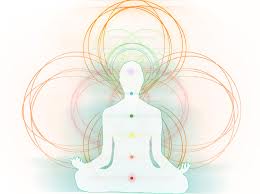
The first recorded instructions for meditation called Dhyana , comes from the Hindu traditions of Vedantism around 1500 BCE, but many suggest that the practice extends back into prerecorded history. For me, meditation is one of the fundamental practices for Life Mastery.
During meditation, I experience a heightened state of awareness. Thoughts are no longer bouncing around like a rubber ball in an empty closet. Meditation slows the ball down, bringing me into the present. I prefer to do my practice for thirty minutes every day around noon; this makes a huge difference in how I process the second half of the day.
Here’s an article in Women’s Health magazine I found helpful called “Your Body On…Meditation” that sums up the benefits superbly:
1. Brain – Research shows that meditation can increase alpha and theta brainwave activity, which is linked to relaxation. What’s more, practicing meditation every day for two months can physically beef up some parts of your gray matter!
2. Mood – Slipping into a meditative state can light up the area of your noggin that controls complex thoughts and positive emotions. Some kinds of meditation can also build mental muscle in the brain’s other hubs for compassion, empathy, and fear, allowing you greater mastery over your emotions and helping you feel closer to others.
3. Lungs and Heart – Meditation increases activity in your parasympathetic nervous system, which controls your rest-and-digest functions (the flip side of your fight-or-flight response). Reflexively, your lungs begin to draw deeper breaths. And your heart begins to beat more slowly, causing your blood vessels to relax. In fact, regular meditation can drop your blood pressure by up to four points, lowering your risk for heart disease.
4. Willpower – It sounds too good to be true, but practicing daily meditation can lower your blood sugar levels (high ones can lead to diabetes) and may cut cravings for salty foods.
5. Immune System – One theory: Meditation helps nix the mental negativity that may dampen immune response. Another thought: Meditation can prompt your body to step up its antibody production. Whatever the biology, research shows meditators may be more able to fight off infections. They may also have better pain control when injured.
Wow!! Imagine if meditation were a pill your Doctor could prescribe. This would be health care reform at its finest and all for just fifteen to thirty minutes of your time every day.
My belief is that meditation is an antidote for the daily technology-driven intrusions in our lives. We are bombarded with so much information from many different directions all at the same time. Meditation is the way to clear our minds, making room for more creative inspiration to flow into our lives. For me, meditation also clears the channels for the universal spirit to send me guidance and direction for living a purposeful life.
If you’re a novice, explore different times for and types of meditation until you find a practice that works for you. Wayne Dyer wrote an exceptional little meditation book called “Getting in the Gap,” that I recommend to people, and it comes with a CD.
Namaste my friends, and pass it on. You won’t get to keep it unless you give it away.
Todd Alan
by Todd Alan | Dec 10, 2014
 When I began my journey in self exploration, I really resonated with the acronym for EGO, Edging God Out (of my life). As time progressed, I came to a deeper understanding about EGO. It’s as though my ego was in charge, like a boss, preventing God from flowing through me. This was a huge revelation for me, a total game changer in how I showed up in the world.
Don’t get me wrong, we need the ego! The ego is the one that makes those phone calls to clients and shows up on time for appointments. It helps you move forward with your endeavors, dreams, visions and goals. The trick is to get the EGO working for you as an employee instead of you working for it as your boss.
And get this – the Boss EGO can only survive if you are living in the past or the future. It is impossible for it to have control over you in the present moment. Here is how you call the Boss out:
Pay attention to how your Boss EGO works in your life. Notice when you feel:
- A need to be right or better than others.
- Offended by what others say or do.
- A desire for revenge or retaliation.
- Negative emotions, such as misery, worry, fear and conflict.
Now start practicing:
- Detachment from past titles and awards; they do not define your true Self.
- Listening to others, really listening to them from your heart.
- Being present with others, refraining from jumping into the conversation with your point of view or answer.
Remember, the bossy EGO wants to keep things as they’ve always been – fearful, doubtful, worried, angry; it doesn’t like change! Learning to fire the Boss EGO and demote it to your employee is a huge step toward a spiritual transformation. Once this happens, the doorways to your true Self opens.
Make it a great day, and remember, it’s a choice!
Todd Alan
by admin | Dec 8, 2014

One of the most powerful processes I keep experiencing is self exploration or “taking a personal inventory.” To do that, I ask myself: Why is it that I react to things the way that I do? What are some of the deeply engrained beliefs that cause me to react? What is the real truth about myself? Conducting a personal inventory is when I sift through the attitudes, thoughts, beliefs, fears, actions, behaviors, and the behavior patterns that block me, causing me problems or failure.
The personal inventory process can be found in many places. It is described in the “Sermon on the Mount” and the Book of James. It is a process that is the corner stone of 12-step programs and is described in the literature, such as the Big Book of Alcoholics Anonymous. The “Big Book” describes the results of this process as “being rocketed into the fourth dimension.” What can I say? It was written in the 1930’s. Even still, millions of people from all walks of life have come to a new understanding and have awakened to a new way of life as a result of taking a personal inventory and examining their findings.
Here is an excerpt the “Big Book” uses: “A business which takes no regular inventory usually goes broke. Taking a commercial inventory is a fact-finding and a fact-facing process. It is an effort to discover the truth about the stock-in-trade. One object is to disclose damaged or unsalable goods, to get rid of them promptly and without regret. If the owner of the business is to be successful, he cannot fool himself about values. We did exactly the same thing with our lives. We took stock honestly. First, we searched out the flaws in our make-up which caused our failure. Being convinced that self, manifested in various ways, was what had defeated us, we considered its common manifestations.”
Being a small business owner myself, I relate to the idea that our lives are just like a business we need to manage. We have this inherent ability to rationalize our behavior, yet the only experience most of us have in taking personal inventory is taking the inventory of others. We must learn to conduct an inventory of Self.
Here’s another way to look at it: We go through life wearing a backpack. As we live, we fill this backpack with stuff better referred to as baggage. Eventually this backpack gets full and very heavy. We pack this stuff around without even realizing it, yet it has a huge impact on the way we show up in the world. Taking a personal inventory is like taking the backpack off, emptying it out on the floor and exploring all of the things that make up our lives. We take a good look at them: do they still serve us? Is this who I want to be? What we end up with is a lighter backpack. It’s like getting a runner’s second wind as we continue on with a new life, a new direction, with new energy.
When I experienced the benefit of this process, I was awakened to a whole new world. The person that I was meant to be came alive. The egotistical, self-centered, pompous ass was put to rest. I found myself with a respect for other humans and a respect toward myself. My past experiences were no longer a part of my new story; it was like I was rocketed into a new dimension.
The best way to get started is to write. Write your story from your earliest memory. Focus your attention on the ways you reacted to events that occurred in your life. There are 4 areas you want to pay particular attention: resentments, fears, harms to others, and sexual conduct. There really are no right or wrong answers. The point is to get honest with yourself and get to know what makes you tick!
Namaste my friends, and pass it on. You won’t get to keep it unless you give it away.
Todd Alan
by admin | Dec 7, 2014

“I believe that the man who observes self-control in thought, word and deed, right in the midst of the world, is verily the true ascetic. If things do not bind us and if we are not attached to things even when they are easily available to us that according to me is the greatest test of our detachment than merely withdrawing to a lonely forest.” ~
Mahatma Gandhi
Practicing detachment has great power in all aspects of our lives and is one of the keys to actually manifesting our reality. However, this doesn’t mean we don’t get to make our plans. On the contrary, the main point to “Detaching from Outcomes” is to set our intentions, dreams, visions and goals; this builds a road map to follow and enables us to take action in a forward direction. By understanding that the outcome will be that which we desire or something better is how we co-creator with spirit and our Higher Powers.
We’ve all heard the saying, “If you want to make God laugh tell him your plan.” So instead, share with your Higher Power what your intentions are and allow the creative intelligence of the universe (God) to assist, guide and co-create with you. Things will come into your life that you could have never imagined or dreamed of by yourself.
Having this radio show is a perfect example: I had an intention to become a public speaker. I had this vision in my head of standing on a stage in front of thousands of people as far as the eye could see in three directions; all were there to hear me speak. I had an affirmation that would replay in my head all the time – “People of the earth, can you hear me?” I had no idea how I was going to make this happen, but I was committed to following through. I shared this dream with a friend one day and he told me about Toastmasters. He was a member and invited me to a meeting.
Rather quickly, I fell in love with toastmasters and began to build my public speaking confidence. One day at our meeting, this same friend made a comment about my voice, asking me if I had ever considered radio. He told me about some broadcasting classes and I signed up. Now I was in love with the idea of being a public speaker on the radio! Not long after this, I was asked to speak at an event. A woman in the audience heard my voice and invited me to join her talk show. All of this happened in less that a year. Today people of the earth can hear me all over the world. This would have never happened if I weren’t able to detach from the original vision of being on a stage in front of thousands of people. I had to detach from that outcome to receive this gift.
Detaching from outcomes is a simple thought but difficult practice. But just like learning to ride a bike, to master it just takes commitment. Then it becomes second nature and your whole world opens up.
Namaste my friends, and pass it on. You won’t get to keep it unless you give it away.
Todd Alan
by admin | Dec 7, 2014
Last week I mentioned four steps to experiencing the Law of Attraction, and I thought I would continue on the topic. There are two other conditions worth noting that form the Law of Attraction that are somewhat woven into the aforementioned ideas of asking, believing, receiving, and action.
First is an attitude of gratitude. Gratitude sets up our ability to be in resonance with our higher good. It puts your thought processes in a position to create more things to be grateful for.
The other condition is visualization – becoming clear on what you want to attract into your life or create. Visualizations must be in the present tense as if they are happening now, right here, today. Visualization is strongly tied to action, as visualization without action is just fantasy.
Evoking the law of attraction in our lives is a practice. Its always present and always working.
Napoleon Hill, who spent 20 years studying the world’s most successful people, came up with a simple recipe for evoking the Law of Attraction:
1. Fix in your mind exactly what it is that you desire. Anchor it with emotion. Visualize yourself possessing your desire.
2. Determine exactly what it is that you intend to give in order to receive that desire. There is no such reality as “something for nothing.”
3. Set a distinct date for the possession of your desire.
4. Create a plan, start at once, whether you’re ready or not, to put this plan into action.
5. Write out a clear, concise statement using the ideas from the first four principles – your desire, the date you will have it by, what you intend to give to receive it, and the plan you have to acquire it.
6. Read the “Statement of Desire” out loud twice a day in the morning and in the evening. AS YOU READ, SEE AND FEEL AND BELIEVE YOURSELF ALREADY IN POSSESSION OF THAT WHICH YOU DESIRE.
For the next week try this 6 step process on something that you desire. I bet you get what you want. Then go for something big – shoot for the moon!
Namaste my friends, and pass it on. You won’t get to keep it unless you give it away.
Todd Alan

 Guest Post by Coach Debby:




Quick Links to our Social Media Sites