by admin | Dec 7, 2014
Remember the book, The Secret? The best selling phenomenon that went viral overnight resulting in over 20 million copies sold? It was about the Law of Attraction, and what’s interesting is there was nothing new in that book – the thoughts, ideas, and rules have been around for a very long time. In my view, The Secret contained all of the key components to attracting the life you want except one: Action. You must take action to put yourself into the flow.So, the end result of this book was that readers were lead to believe that all they had to do was 1. Ask for something, 2. Believe that they already possessed it, and 3. Receive it. But none of this works if we don’t take action; we must participate in our own lives.
That said, here are some revised steps:
1. Ask for something that you are interested in. Develop that interest into a desire, and make that desire a burning desire. This is key. Desire sets up intention and intention is where your attention goes. As we direct our attention to our interests, this magnifies the power of attraction because it dominates our thoughts, attracting more of the same thoughts. Then, when opportunity presents itself, you instantly recognize it and can take action.
2. Believe in yourself AND believe that you are worthy to actually receive what you ask for. Most things that are sought never have a chance to come into reality because of the voice of internal judgment. An attitude of gratitude is one thing that will assist you in overcoming the voices that say you can’t do something or that you don’t deserve it. Getting the subconscious to buy in is key. The subconscious doesn’t have the ability to distinguish between real and not-real; it only works on the thought. That’s why they say to act as if you already have your desire or do the thing that you are asking for. This helps to anchor the thoughts to become what you want and motivate you to take action. There is that word action, again.
3. Receive. This is really about giving. You have to understand what it is that you are willing to give in order to get what it is that you desire. When you are willing to give, there can be an expectation to receive. I had a hard time with this at first, but it has great merit. Expecting results keeps you going with your intention. To desire is to expect and to expect is to achieve.
4. Action. The Law of Attraction is not a quick, get-what-you-want-from-your-rocking-chair scenario. Action puts you into the flow of abundance. It’s like getting ready to take a shower; you turn the shower on but you don’t get the benefits from it until you take action and step in. Taking action allows us to be in the flow of opportunity. Otherwise desire would have no way to present itself to us.
Namaste my friends, and pass it on. You won’t get to keep it unless you give it away.
Todd Alan
by admin | Oct 10, 2014

On September 30, 2014, Todd and I had the pleasure of talking to Sara Harvey Yao, a Leadership Consultant in the greater Seattle area, about the notion of getting present. It’s not just important for business, but it’s also important when you want a good experience with the family! Read her blog post on unplugging from devises and the affects it has on the ‘ol nerves until we “get present” again. Enjoy!
THE PROMISE OF UNPLUGGING
The sea turtle that visited us on the beach in Hawaii.
I regularly talk about the role the technology plays in our ability to be present and I put myself to the test to see if I could really walk my talk on our recent nine-day vacation to Maui. Before the vacation I announced to my family I was going to “unplug” from technology while on vacation and they were supportive, albeit skeptical that I would actually do it. Upon my arrival to our condo I put my laptop in the desk drawer, turned off my email and texting on my phone and put it on silent.
For a moment I felt liberated, slightly smug with myself and was distracted by the beautiful view from our oceanfront condo. That lasted for about an hour and then I started feeling anxious. I noticed my heart was beating faster than normal and I couldn’t sit still. My mind was being infiltrated by what I might be missing and in general, I felt “twitchy”. Luckily I knew what was going on – like an addict, I was “coming off” of technology.
I’ve read tons of studies about how the intermittent stimulus of checking email and surfing the web gives our brain a hit of the feel-good chemical dopamine and how addictive it is. It’s one thing to intellectually know coming off of technology is hard, but it’s a whole other thing to actually try it. My reaction to coming off technology was so surprising to me is because I consider myself a “moderate user” of technology. I have decent technology boundaries, like leaving my phone downstairs when I go to bed, not using it during family time, and putting it on silent for most of the weekend. In my mind, I wasn’t supposed to be feeling this much withdrawal from technology.
After about two days of on and off anxiety, I settled down and really relaxed. I read three books (that had nothing to do with work), swam in the ocean, and had nightly Uno tournaments with my kids. When my system finally shifted from “doing” to “being” a series of truly magical experiences occurred. We saw a spontaneous whale show while relaxing on the lanai, a pod of dolphins came to play with the small boat we were on, and a sea turtle came out of the water, walked up to us and hung out three feet from us on the beach. As a family we noticed the small things like gecko eggs, beautiful flowers, and cloud shapes. I felt more joy and experienced a deeper sense of love for each member of my family and for life in general. I had more clarity, direction, and realizations about my work and life than I’ve had in some time and my husband reported the same thing.
I can’t promise everyone will experience the almost surreal joy we felt on vacation, but here are some things you can expect from unplugging:
- Anxiety: No matter if you’re simply slowing down for a few hours or unplugging for nine-day vacations, you will initially feel some anxiety. No need to be alarmed, this is an important part of the process and it will pass in time as your brain shifts its neuro-pathways back to its “pre-technology” ways.
- Enhanced Senses: Science has proven our senses are dulled by technology, and when you unplug, your system’s senses can and will return to their natural state. You will feel, hear, see, and taste things with more vividness.
- Clarity: As a result of unplugging, you will be more connected to your gut sense. That clarity can propel you to take productive action once you’re home.
- Rest: You may likely sleep better when your brain is off its technology high, but even if you don’t, there is an inherent level of rest you will enjoy.
I’ve been back from vacation for more than a week, and back to using my all my devices as I was before vacation, but the clarity and rest I experienced is still very alive. Believe it or not, as I returned from my vacation and moved through my email, there wasn’t a single message or Facebook post I missed that outweighed the joy of truly resting.
by admin | Oct 8, 2014
In September, prolific writer and highly acclaimed instructor, Eric Maisel, joined us for a wonderful conversation about the writer’s life and making meaning. It turns out that even the busiest folks can implement these tools and find some time to write. Read more here:
ART IN 15-MINUTES A DAY, by Eric Maisel

Virtually all of us tend to scorn small increments of time and “throw away” fifteen minutes here and forty-minutes there, arguing that we are doing so much already that those windfalls need not be used productively.
We opt to check our email, surf the Net, play a game, take a peek at our social media, watch a few minutes of a program that we like, or in some other way pass the time until our real work begins again.
Artists with busy lives often find that they need to change their minds about squandering these precious small increments of time—in part because so much can get done in just a few minutes.
Yes, it is much easier for a writer to open a file and start writing than it is for a painter to get all set up to work super-quickly – yet that still may be a habit for a visual artist to cultivate, so that the small increments of time that life provides get used well.
If you can’t get to the studio when those fifteen minutes appear, can you sketch, make notes to yourself about your ideas and intentions, or in some other ways make productive use of those sudden intervals of time? This isn’t to create a new “should” about how you “should” be more disciplined or more productive. Rather, it’s to afford you the opportunity to stay connected to your work and involved with your work in ways that may really serve you.
One of the ways that we can connect to our deepest artistic themes, themes that may be eluding us in the chaos of life, is to attend to our art so often in the day, even if just for fifteen minutes here and thirty minutes there, that our art remains close to us and has a chance to grow. Don’t scorn those small increments of time that added together amount to hours, days, weeks … even years!
by Todd Alan | Jul 11, 2013
My guest on the show July 9th, 2013 wrote this amazing blog post about “Gift Economy” I so resonated with it, mostly because Life Mastery Radio is all about bringing messages and thoughts to improve the lives of those that tune in to the show, and I ask for nothing in return. I asked Pam for her permission to repost it here on the site. Enjoy!!! Let Pam or I know what you think about this new old idea. www.pamgrout.com

“When you realize there is nothing lacking, the whole world belongs to you.”–Lao-tzu
“Tell me, what is it you plan to do with your one wild and precious life.”–Mary Oliver
Some people go to superhero movies. I prefer to BE a superhero. And by that I mean I actually dress up in a cape and bright costume and go out and perform good deeds.
In fact, in early October, I will join a whole band of bike-riding super heroes with names like “The Zing” and “Love Ninja” for a week of humble and spontaneous service. We’re meeting up in St. Louis.
And in honor of Ethan Hughes who started the International Superhero Headquarters and the Possibility Alliance on a 220-acre farm in northern Missouri, I’d like to re-run this post that ran last December.
Monetize, Schmonetize: the real juice is in the gift economy
You don’t need Alex Trebek or “buzzwords for $5000” to know that the internet’s top trend right now is “How do I monetize my website? My blog? My twitter feed?” Even YouTube offers monetization to prolific video uploaders.
Since I’ve been accused of being a “subversive presence on the planet,” I want to talk today about the exact opposite.
How do you un-monetize your life? How do you go against the culture’s dominant paradigm of wanting to “always get, get, get” and practice what’s known as the gift economy?
The gift economy, a philosophy more than a financial practice, is one in which people refuse to believe in scarcity and fear. Instead of always trying to “get more,” a gift economy is for those looking for ways they can give. It’s so radical that most people can’t even understand it.
I pitched a story about the gift economy to my editor at People magazine. She loves heroes, good news, and heart-warming human interest stories. But even though I gave her three specific examples of people working solely in the gift economy, she couldn’t understand it. “But how does it work?” she kept repeating.
It works, although I could never explain this spiritual belief to her, because once you give up your incessant fear and belief that it’s a dog-eat-dog, every-man-for himself world, abundance can’t help but show up in your life. It’s actually the reality of the human condition, but as long as we’re “monetizing” and erecting walls of fear, we block abundance.
Perhaps the best example of the gift economy is Nipun Mehta, a guy I consider my hero, the guy I begged my People editor to let me profile. In April 1999, when he was 25, he gave up his lucrative paycheck at Sun Microsystems to become a full-time volunteer. A fan of Gandhi, who said, “be the change you wish to see in the world,” Mehta started “giving” as an experiment. He started with money (he gave to charity), moved to giving of his time (volunteering at a hospice) and then decided he’d go full-time, giving of himself unconditionally with no strings attached. Thirteen years later, his experiment has been a huge success.
He started a free restaurant, a free inspirational magazine and has given away hundreds of millions of dollars in free tech services. He’s a Stanford-trained engineer who was raking it in during the dot.com heyday. But he wasn’t sure that’s where happiness lay. He works with a network of more than 100,000 volunteers who operate on 3 principles:
1) Everything is strictly volunteer. Money is NEVER charged
2) No one ever ASKS for money. Many charities do good work, but they all ask for donations. They do endless fundraising. He says that forces people to be in a needy space and he comes from a space of believing in abundance and the goodness of mankind. And indeed, money has shown up in spades (from the billionaire founder of Sony, as just one example) and from anonymous donors who send in checks for $10,000 or more. But Nipun and crew NEVER ask or expect.
3) They focus on small actions. “You just take care of what you can touch, give to whatever is in front of you,” he says and the ripple effects have organized into what he calls their own magic. “I can tell you story after story.”
The Karma Kitchen that he and fellow volunteers started in Berkeley (there are no prices on the menu and the check reads $0.00) spawned karma kitchens in Washington D.C. and Chicago.
“We don’t charge for anything, nor do we advertise anything. The project is sustained by anonymous friends who donate what they can, not as a payment for what they have received but as a pay-it-forward act for someone they don’t know,” Mehta says.
In place of financial capital, Mehta and his network of volunteers are building social capital, synergy capital and a type of subtle capital beyond definition.
Another one of my heroes is Ethan Hughes the guy I mentioned earlier that started the Superheroes Alliance, a group of 700 living, breathing superheroes. Everything he and his wife Sarah grow on their farm at the Possibility Alliance, they give away. They’ve given away goats, fruit bushes, seeds, soil and compost. They’ve given trees to every major city in Missouri. Most importantly, they host more than 1500 people a year who come to their farm from around the country to learn about permaculture. Permaculture classes normally start at about $1500. But Ethan and Sarah give them away free.
“At first people are shocked. So few mainstream Americans believe someone would actually give something away free with no ulterior motives. We’re in a cynical society that rarely trusts someone who says, “hey, I just want to help.”
The Hughes and their network of volunteers have helped build a library, bucked hay for a fellow farmer, cleaned up city parks and donated something like 50,000 hours of community service…all with no expectation.
“It’s really important to me to create access, and the gift economy is about access,” Ethan says.
Another example is Dr. Binal Shah, a naturopathic doctor with a biology degree from Rutgers, who offers a gift economy medical practice. She calls it the Karma Clinic and says it’s not about giving away “free” healthcare. It’s about sharing an experience of generosity that has the potential to shift both the giver and the recipient.
That’s why I say, “forget monetizing.” Think about something important, like what gifts do you have to give.
Pam Grout is the author of 16 books including E-Squared: 9 Do-it-Yourself Energy Experiments that Prove Your Thoughts Create Your Reality.
Reposted from: http://pamgrout.com/2013/07/10/when-you-realize-there-is-nothing-lacking-the-whole-world-belongs-to-you-lao-tzu/
Thanks Pam!
by Todd Alan | Jun 26, 2013
On the show 6/25/13 with Laurie Dupar we touched on the subject of medication. Laurie gave me permission to repost this about how ADHD medications work. ~ Todd
ADHD is a medical condition where the brain is not producing enough of the neurotransmitter Dopamine. The brain is no different than other organ of our body, such as our heart, lungs, kidneys or pancreas. In fact a good analogy to help understand how ADHD medications work is similar to how insulin helps someone with diabetes. In diabetes, the pancreas does not produce enough insulin. Sometime this occurs in childhood…sometimes it happens with aging. Either way, management of diabetes includes learning about the condition of diabetes, making changes in lifestyle habits, such as eating certain foods, and increasing exercise. However, one of the most important ways to re-balance the body’s insulin is with a pill or an injection of insulin.
ADHD is the similar. With ADHD, the brain is simply not producing or utilizing enough Dopamine. You see most of the Dopamine in our brain is made in the middle part of the brain. Without sufficient amount of Dopamine, there is not enough of it to get to the frontal lobe of the brain so it can do all those “executive functions” such as pay attention to things that are less interesting, or filter out environmental stimuli or pause to think before we act or say something. We don’t know the exact cause of ADHD, but research is showing that it is probably genetic. It is passed from one generation to the next. So, when a person takes a stimulant medication such as Ritalin or Adderall, those medicines work directly on the brain to help those Dopamine neurotransmitters either produce more Dopamine or utilize it more effectively. What they are “stimulating” and only simulating is the Dopamine! Viola’! Stimulating the Dopamine receptors increases the Dopamine available in the brain. With an increased Dopamine level the brain is now better balanced and ready to complete the tasks of the day!
Here is the link to Laurie’s website
by Todd Alan | Apr 30, 2013
If you’ve ever thought about your “money story”, you may have come up against some paradoxes–conflicting messages about money. And when we are confronted with paradoxes, we often react by simply doing nothing…putting our head in the sand.
The first obvious conflict many women deal with is the message from their families that they should somehow know how to handle money, without being given any training. Did your parents teach you how to plan where you wanted to spend your money? And then analyze what was happening? And then figure out creative ways to get your needs met so you didn’t feel deprived if you didn’t have enough? And they taught you about savings and debt?
I hope you had those parents, but I’ve heard countless stories of people who learned nothing beyond a few conflicting financial platitudes.
- “Don’t go into debt. Here’s a credit card.”
- “You better live within your means (but we won’t teach you how to budget).”
- “Don’t talk about money (but make sure it doesn’t mess up your relationships).”
- “The rich get richer and the poor get poorer (There’s really nothing you can do. It’s all fate. Give up.)”
- “Make sure you can take care of yourself (but we won’t model how to earn your worth).”
Sometimes the opposing messages are stated and sometimes modeled. Sometimes your past messages conflict with your present life. Perhaps, for example, your parents said negative things about wealthy people, so you feel really bad about having wealth, even though you know your parents wanted good things for you.
Maybe they told you to save your money, but spent every dime that came in the door, so you never saw what savings looked like, though you know that somehow you’re supposed to be saving, so you just feel bad that you’re not.
Or maybe a parent never spent on themselves, and you feel bad when you do nice things for yourself, even though you have enough money.
When we are confronted with opposing money beliefs, we often react by cultivating an air of ambivalence around money. We work hard not to care about it and not think about it. We may even secretly feel we should be “above” money. Besides, if we do nothing, then maybe we won’t pick the wrong path.
The key is to begin to name the conflicting money beliefs. Then you can consciously move forward. As long as you are not aware of the conflict, you will likely feel unbalanced about money.
So what are your paradoxes? What conflicting messages have you inherited?
by Todd Alan | Apr 25, 2013
I thought this was a very good read, It’s something to watch for and to be aware of………Now you know 🙂 ~ Todd
By Diane Lapine
First, let me say that for those of you familiar with the Law of Attraction, you may also have met its cousin….the Law of Distraction (LOD).
Basically, the Law of Distraction says that any time you identify a goal and are activating the Law of Attraction; you may become an unwitting victim of the law of distraction. The law of Distraction says that anything you wish to attract may be thwarted if your focus shifts and your focus may shift for just about any reason! How many reasons do you have for losing focus? About a million?
Sometimes the Law of Distraction is a message to us that we do not feel deserving or worthy of something and, thus, we are literally thwarting ourselves. Could this be happening to you? First, check your self-esteem and sense of worthiness. Are they in top order? If the Law of Distraction keeps throwing you under the wheels of the misery bus, then maybe you need to do some work here.
Second, if you were to achieve your goal is there someone close to you who might be impacted negatively? Would it change a significant relationship you have and maybe not for the better? For some of us, it will challenge us to leave the safe place called Dullsville in the hamlet of predictability.
If your sense of worthiness is good and there is no concern attached to attaining your goal (lucky you, you are in the minority), then you may just be easily distracted. But, whatever the cause, distraction will nonetheless keep you from where you need to be.
So, how do you stop the Law of Distraction from defeating you?
The Law of Distraction has two enemies – focus and consistent action in the direction of your goal.
First, know that the LOD is at work. Second, get a coach to remind you regularly of what your goals are and to break through those hidden defeating thoughts. Third, get back on track each time you drift and apply consistent action toward your goal.
This process may play itself out over and over again until you achieve the desired result. If the LOD were not so powerful, we would all be wildly successful with relative ease. However, life is designed to distract us from our goals and the solution is a relationship with a good coach to keep you on track. If you can do it on your own, more power to you – most of us can’t.
So, if you’re tired of living in the zip code of Dullsville (00000) and would like to move on, get someone who can help you get there. Hire a coach and tell the Law of Distraction to take a hike.
Diane Lapine is a business and life coach with over 20 years experience in corporate life. She is an expert in the law of distraction.
Article Source: http://EzineArticles.com/?expert=Diane_Lapine
by Todd Alan | Apr 21, 2013
 The sixth insight states that childhood dramas block our ability to fully experience the mystical. All humans, because of their upbringing, tend toward one of the four “control dramas”: intimidators steal energy from others by threat. Interrogators steal it by judging and questioning. Aloof people attract attention (and energy) to themselves by acting reserved or withdrawing. And poor me’s make us feel guilty and responsible for them.
The above description from James Redfield’s book, The Celestine Prophecy, defines four ways that people are in relationship with one another. All are attempts to control another’s behavior. What is this need we have to control? Why do we feel it is necessary?
We attempt to control and manipulate others because we believe that if they would change their behavior we would be happy and so would they. When people do things we don’t like, or when we’re not getting our way, we think they are wrong. Then, believing we are right and they are wrong, we think that we have the right to impose our beliefs on them. What we are attempting to do is protect our beliefs. How does this play out in a relationship?
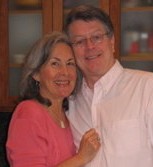
Marilyn: Control dramas are a fascinating phenomena within a relationship. It is usually easy to pick out our partner’s drama, but rarely do we recognize how we play into it. For example, my former husband was a classic interrogator. I’m convinced that James Redfield coined the term after meeting him! A critical man, my ex continually poked and prodded and found fault in everything I said or did. Sometimes I wondered what kind of perverse pleasure he got out of finding me so inadequate. Nothing was ever good enough for him. He could question me at length about anything, even something as simple as grocery shopping: “How could it take you so long to shop for food? How much did you spend this week? How could you be so extravagant? Were all those purchases really necessary? Did we need two kinds of lettuce AND tomatoes? etc. I once bought a deli sandwich to split with my son. Seeing the sandwich on the receipt, my ex blew a gasket: “How dare you waste my money on a store-bought sandwich? You could have made one when you got home!” (This man earned a handsome salary; $3.00 was definitely not a hardship.) I often felt like I was on trial. It was so infuriating; I couldn’t win. During each interrogation I would ask myself: “Why do you bother trying to talk to him?; you know what the end result is going to be.” Eventually I quit trying. It was then that my control drama became clear. In case I need to name it for anyone, I am aloof.
After many years of being interrogated, I learned to protect myself by ignoring my ex as much as possible, remaining busy with children, work, school, or friends. I would refrain from telling him what was happening in my life and when I had to talk to him, I would be as vague as possible. He hated this behavior. What I didn’t recognize then are the wounds my detachment reopened for him, having grown up with a father that traveled extensively for his job; a father whose attention he wanted, but had to share with three other siblings; an aloof father.
This re-wounding pattern is what happens over and over again in relationship. We trigger our partner’s wounds and unknowingly re-wound them. They, in turn, trigger our wounds and we each continue to play out old patterns. The reason this happens is because as our relationships deepen, our partner unconsciously touches those parts of us which need to be healed. In the case of my relationship with my former husband, he needed help healing the wound that triggered his interrogation drama. He needed to learn a new, more appropriate way to get attention. I, on the other hand, needed help healing the wound that caused me to withdraw and act secretive, a wound that originated with a critical mother. Instead, we continued to re-wound one another. We were so caught up with fighting each other’s control dramas and proving ourselves to be right that there was no room for experiencing the joy of relationship, let alone catching a glimpse of the mystical.
The opposite of needing to control a relationship is trusting in it. In a conscious relationship there is no need or desire to control. It is not necessary to change our partner’s behavior or to protect our beliefs. Instead, we choose to trust ourselves, our partner, and the relationship. Depending on where we are in our growth, we can then can use the relationship to do our personal work: to recognize our wounds and control dramas; to work with our partner to heal ourselves; and, to move toward becoming more spiritual and finding higher meaning in our lives.
Chuck: Marilyn and I are both aloof. I know that when I go into a room I will wait for others to say hello to me. I once thought I was just shy, but now realize this behavior was developed over time so that I would not have to risk being vulnerable. It was a way I could control how people interacted with me.
I have used this behavior in all my relationships to maintain control. When Marilyn and I came together, we both knew what we wanted in a relationship, namely, an open, honest, sharing of ourself with another. Old patterns, however, are hard to die. When our relationship began, we had fights in which one of us would just leave. It could be leaving the room or leaving the house, but it was an attempt to control the other’s behavior by getting them to come after us. When we realized what we were doing, we began to change that behavior.
Instead of leaving, we made a conscious decision to stay and try to work through the issue. That meant being vulnerable and owning what we were feeling. For example: “I’m feeling very hurt about what you said.” In this way there was no blaming or trying to control. We found that because we care about each other, when we risk being honest about our feelings, the other person is naturally drawn to our vulnerability and therefore to us. We then talk about what happened and resolve it in the moment because neither of us feels blamed or controlled.
Lately we’ve taken this a step further by injecting humor into our conflicts. When one of us is inadvertently critical of the other, the injured person might say something like: “What type of feeling did you want me to have by your last statement?” Said in a humorous way it becomes a clue that the other was hurt and it is immediately dealt with, usually with an embarrassed laugh of recognition. We’re continually learning what it takes to overcome our control dramas. We still have disagreements, but because we both recognize our tendencies toward aloofness, we have an awareness of when we withdraw. We can then choose to break the habit by owning what’s going on in the moment and talking about what just happened. We are having fun with our attempts at humor and they usually work.
Marilyn and Chuck:This is our life’s work, exploring new ways to use our relationship for personal growth. It includes staying in integrity with ourselves and choosing to help heal instead of re-wound each other. We believe that one of the greatest gifts we can give the people in our lives is being 100% who we are. It is then that each person will be challenged and can take responsibility for their own lives, fears, and emotions. In this way we become whole.
This article, written by Marilyn and Chuck, is reprinted with permission from Woman’s Way Magazine. Copyright © 2001 the Relationship Specialists, Inc. All rights reserved.
Chuck and Marilyn maintain an exceptional blog here
by Todd Alan | Apr 21, 2013
 What is this great power? We know what it feels like when we are in the midst of it––when we are flying high and feeling indestructible. But how can we bring forth this great power when we want it, when we need it? How can we be patient when it doesn’t seem to exist? Before we dive into its consistencies and inconsistencies, let us define the word.
The dictionary tells us, creativity is the ability to use the imagination to develop new and original ideas or things . . . Creativity has been attributed to chance, accident, and serendipity. It has been associated with genius, mental illness, and humor. Some say it is a trait we are born with; others say it can be taught with the application of simple techniques.
Is creativity an accident? Is it serendipitous? Is it a stroke of genius that we stumble upon from time to time? Or is it something intrinsic to our very nature?
We watch a great dancer pivot from one pirouette to another and wonder how in heaven’s name she can make it look so easy. We see an actor move seamlessly from one emotion to another, take on another persons’ persona and lose himself totally in the character. We see artists, musicians, and businesspeople prosper exponentially in their chosen fields, excelling without seeming to exert an ounce of struggle, as if their innate gift had surfaced from lifetimes of practice.
We know what this power feels like when it is present, because there is a sense of deep peace, boundlessness. The ego disappears, and we become one with an unwavering firmness and flexibility. We are “in the zone.” Everything flows. In perfect balance, we become the steady flame in a windless space.
Andrea’s website http://www.holisticpr.com
by Todd Alan | Apr 11, 2013
 In 1937 when Napoleon Hill wrote his now-classic tome, quantum physics was still in diapers. Einstein, of course, had posited his famous theory of relativity, but quantum physicists didn’t completely understand how it worked.
To tell you the truth, they still have trouble making sense of the crazy quantum world that is changed by simple observation. As famous physicist Richard Feynman was known to say, “Nobody understands quantum mechanics.”
However, we do know with complete certainty that thoughts produce energy (much like invisible radio waves) and that they have a significant impact on your life. This energy, in fact, provides the building blocks for your life experience.
The update to Hill’s material should be this: “Think and BE Rich.” Time is irrelevant. You can “be rich” now. Money is only a representation of your “wealth consciousness” and “wealth consciousness” which is the true source of your financial picture is available right at this moment.
Money—or what we think of as money—bills, coins, etc.—are merely tools that demonstrate a person’s “wealth consciousness.” And, in fact, according to David Cameron Gikandi, only 4 percent of money in banks (depending on the country) exist in physical form. Furthermore, he says, “Money is not real. It’s a shadow of something else.”
So by expanding your consciousness into the true abundance of the world, you acquire what is in you already. As Gikandi says, “You have more wealth capability within you than you can possibly experience in a lifetime. Nor do you need to know how to convert wealth consciousness into paper money. It happens automatically when you expand your wealth consciousness.”
In the quantum world, you are connected to everything. You already have all the riches you could ever imagine. They exist right now as probability waves. But that’s the problem. You don’t imagine them.
You keep focusing on what you don’t have.
So back to Napoleon Hill. He advises people to come up with a date when they want a certain amount of money. Sometime in the future. But the trick in the quantum world is to “be rich now.” Again, all your riches already exist in the quantum world.
Being wealthy is an internal state. As Gikandi points out, “It has nothing to do with the outside world. The internal state of wealth is a decision you make right now and you become it right Now. You need nothing outside yourself to make this decision. Do not attempt to get wealth. Be wealth.
“Even in a billion lifetimes, you cannot possibly exhaust the wealthy given to you freely by life. But you can “fail” to receive it by your own thoughts, words, action, and most of all, your chosen states of being.”
The only thing standing in your way is your “wealth consciousness.” Isn’t it time to quit “thinking and growing rich?” Instead, it’s time to Think and BE Rich.
Pam Grout is the author of E-Squared: 9 Do-it-Yourself Energy Experiments that Prove Your Thoughts Create Your Reality.
Pam has more cool blog posts on her site here Todd



Quick Links to our Social Media Sites