by admin | Apr 5, 2015

Whether you are delivering a business or sales presentation, it’s a mistake to think you can just “wing it.” If you have years of experience in your industry or profession, this still holds true. Even professional speakers must prepare for and rehearse before each presentation.
My brother Robert Fripp, the genius in my family and an internationally acclaimed guitarist, describes it this way: “Every time you put your foot on the stage, there is an assumption of innocence within a context of experience.” In other words, Robert has played the guitar for 50 years, but he approaches each performance with the awareness that this is the first time, for this audience, in this venue, at this period in time.
While you may be experienced, it is a good policy to think of every assignment as new and fresh within its unique context. For example, if you’re a professional speaker, the last 300 audiences may have loved you, but you do not know if this next one will. You cannot take it for granted.
Most importantly, you cannot take your audience for granted. Speaking is always all about your audience. Consider what makes your audience unique and how you might connect both intellectually and emotionally. Whether you are speaking for the first time or the thousandth, here are a few strategies to help you give every audience your best:
- Avoid the temptation to just “wing it.”
- Start preparing well in advance. You will thank yourself later!
- Research your audience. Take time to read industry, association, or company publications and familiarize yourself with your audience’s unique interests and concerns.
- Customize your presentation for each audience.
- Edit your presentation for clarity, specificity, and emotional connection.
- If you plan to use slides, customize and edit these also. Don’t get too carried away with slides. An audience expects to connect with you – a real person speaking – not sit through an endless slideshow.
- Rehearse, rehearse, and then rehearse some more.
- Whenever possible, meet a few members of your audience before you take the stage.
- Physically warm up before your presentation.
by admin | Mar 29, 2015
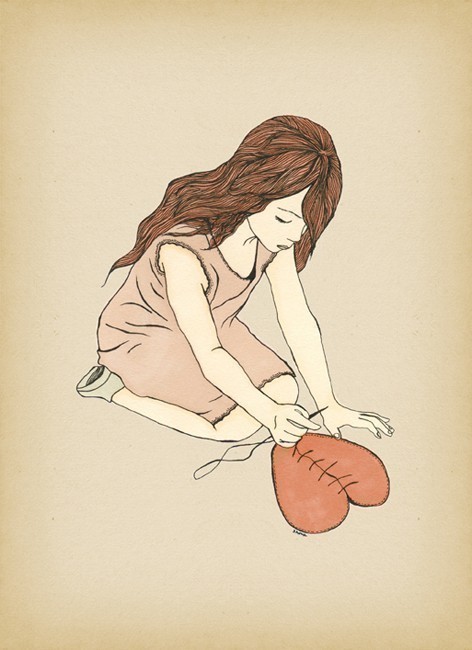
 (Artist Meg Metager)
How can we calm down our animals and help them be more secure, while still attending to our needs as a human being? I call it being in a state of Emotional Leadership.
Emotional Leadership means you are centered, grounded, aware of your animal’s needs, but aren’t taking on their stuff, or allowing them to take on your stuff. Ultimately, while the energy fields of each individual are merged, there is autonomy. I talk about Emotional Leadership in my first book, “Communication with all Life: Revelations of an Animal Communicator” published by Hay House, and in my new book “Energy Healing for Animals,” published by Sounds True and coming in summer 2015, I go into even greater detail.
We are the emotional thermostat in the household. If we are generally happy, our animals are happy. If we are experiencing lows, our animals will sulk with us. Sometimes they will even do wacky, fun things to get us out of our state or rut.
Our emotional life can create a great deal of stress for their emotional life. If we are experiencing emotional highs or lows as a result of something outside the home, or experiencing stress with other humans in the household, the animals will feel this. It is important to maintain some sense of self and take emotional responsibility. That’s not to say when you are upset you can’t cuddle with your cat or your dog, or allow your horse to take you for a long relaxing trail ride to decompress.
However, make sure you thank them and let them know how much they helped. And then pull yourself together as much as you can so they can see you are fine.
Emotional Leadership allows you to drop the unnecessary emotions that clog the clear communication. Taking Emotional Leadership in your household is also important so you don’t feel guilty because you have to leave them at home while you work or feeling frustrated because you can’t spend more time with them. It is also saying no matter where they are in health, they are O.K., rather than putting unreasonable expectations on them.
by admin | Mar 20, 2015

Article Originally Published at New World Library.
Communication between people is a multilayered process. Because of this fact, many of us feel inadequate in our attempts to understand others and be understood. Whenever any two people try to communicate, there are at least two levels to that communication: the overt, conscious message and the covert, hidden message. The overt message consists of the words we hear and the gestures we see. The hidden message has more to do with the intent behind the words. This is something we ordinarily overlook because we don’t have the language to deal with it. Consider this example: as Jay enters his assistant Roberta’s office, she announces, “I’m almost finished with the Power Point presentation. And then I’ll get to re-doing the promo piece for the trade show, and maybe if there’s time today, I’ll do the budget report leftover from Friday.” The overt message here is some information about what she is working on. What’s the hidden message? She is telling him that she is overwhelmed with too much to do, that he’d best not ask anything more of her today.
Jay receives and registers Roberta’s message on both levels. He hears her words. And he feels a discomfort in his gut — there’s something about her what she said that just doesn’t sit well with him. But, like most people, Jay has not been trained to put value on his subtler gut-level reactions. So he nods robotically and gives his usual reply: “Okay. Thanks for telling me.”
A communication like this leaves both people with a sense of incompleteness. There’s something between them that has not been acknowledged. The next time they are together, that unfinished business will affect how relaxed and connected they feel with each other. In time, as more and more of these incomplete communications recur, their communication channel will become more clogged.
If Jay had better communication skills, he might notice the uneasy feeling in his gut and comment on it instead of going on automatic. If he had access to what I call “the Seven Keys to Authentic Communication,” he might respond, “Hearing you say that, I feel uncomfortable. Are you telling me that you’re not available to take on any more work this week?”
Using the key phrase, “Hearing you say that, I feel…” gives Jay a lead-in to stay present to his feelings and thoughts about what he just heard. It helps him pay attention to his more deeply felt but subtler reactions, enabling him to respond in a more authentic way.
The Seven Keys
Here is a summary of the seven keys, along with brief descriptions of how and where you might use each.
Key #1: Hearing you say that, I feel…
When someone gives you feedback, offers an opinion, or comments about any shared experience, you are likely to have a feeling response even if you are not aware of it. This key prompts you to check in with yourself –your feelings and bodily sensations–before responding—so your response will be authentic rather than automatic.
Key #2: I want…
This phrase is meant to be followed by something specific that you want in this moment, for example: “I want you to listen until I’m finished before responding.”When you ask for what you want at a time when you are actually feeling it, the other can feel the clarity and energetic power of your contact. For this reason you are more likely to have your want fulfilled.
Key #3: I have some feelings to clear.
This statement opens the way for you to resolve uncomfortable feelings or unfinished business with someone. Doing so enables the two of you to get over whatever old business you have and get back to a more effective working relationship with each other. As you probably know, when you harbor “withholds,” you are not able to be fully present.
You probably have someone in your life with whom you have left things unresolved or incomplete. If you can bring yourself to at least begin the conversation by using this sentence, it’s a good first step to opening the topic up for discussion so it can eventually be put to rest.
Key #4: I’m getting triggered.
We all get our buttons pushed sometimes. This key phrase helps you recover from those moments when you automatically react aggressively or defensively. It helps you accept that you are not always completely present and self-aware. It gives you a quick and easy way to get yourself back into present time after one of your unconscious fear buttons has been pushed.
When you have this key ready to put into practice whenever you overreact, you have a way of buying time to check in, get reconnected with yourself, and perhaps revise your earlier response.
Key #5: I appreciate you for…
This phrase prompts you to express in specific terms your gratitude for something someone did or said. It lets someone know how her behavior impacted you. As such, it’s also a great way to show the other how you like to be dealt with. And it prompts you to celebrate the things you are grateful for — even small things.
When someone says or does something that you appreciate, tell him or her right then and there. This brings the two of you into powerful, positive present-time contact.
Key #6: I hear you, and I have a different perspective.
This compound sentence is useful when two people have a difference in needs or views. Many people fear differences. They see these as a threat. But, if worked with consciously, differences can lead to more innovative or sustainable solutions. This sentence helps people center themselves in the reality that there are two points of view going on in their discussion. And it helps people learn to hang in there through the uncomfortable period of ambiguity that occurs while partners are working out .
Key #7: Can we talk about how we’re feeling?
If two people are going to learn from an experience, especially a difficult or frustrating one, they need to be able to “stop the action,” step back, and witness that experience. You could say something like, “Can we take a look at what’s happening? I’m feeling frustrated with this conversation. How about you?” That would be your lead-in to stepping back, “rewinding the tape,” and looking together at what just happened to see if either of you would like to change anything.
Making the Seven Keys Yours
Now that you know these seven key phrases, the next step is to make them yours by practicing them with the significant people in your life. You might pass along this article (or the book, Saying What’s Real) to someone in your life and explain that you would like to have a relationship where you both commit to clearing the air and keeping it clear.
Based on the book Saying What’s Real. Copyright © 2005 Susan M. Campell. Reprinted with permission of H J Kramer/New World Library, Novato, CA. www.newworldlibrary.com.
by admin | Mar 6, 2015

(Guest Post by Jamie Turndorf, originally featured in Psychology Today)
Whether you’re getting it off your chest, venting, expressing yourself, airing your feelings or “just being honest,” the truth about honesty is that honesty is not always the best policy.
What’s more, continuing on the path of full disclosure can actually put a permanent closure on your relationships!
The reality is we don’t need knives or guns to mortally wound those closest to us. Words cut like knives and it’s easy to bury your relationship with the verbal cuts of a “truthful” tongue.
The truth is honesty is often a veiled form of self-indulgence.
What do I mean by self-indulgence?
In a nutshell, when feelings build up, it’s frustrating to “sit” on them. And, of course, it feels damn good to release them. That feel good sensation is a form of gratification. It’s like taking an emotional poop, which provides an instant release of pressure. But when we dump emotional turds on others, we are flushing our relationships down the toilet.
It’s a sad fact that our education at home and in school doesn’t include teaching us how to manage our angry feelings. Since intimate relationships trigger negative feelings, this means most of us are mistreating the people we love most by lashing out and even verbally killing those we supposedly love in various overt and symbolic ways.
In my book Till Death Do Us Part (Unless I Kill You First), soon to be republished by Hay House under the title Kiss Your Fights Goodbye: Dr. Love’s 10 Simple Steps to Cooling Conflict and Rekindling Your Connection (link is external), I talk about what I call Fight Traps, which are the dysfunctional ways that humans act out anger. These Traps consist of Open Warfare, such as Name Calling, Character Assassination, Put Downs and Sarcasm, to name but a few, and Secret Warfare, such as Silent Treatment, I Forgot, Recruiting Allies, and so on.
The point here is there’s a continuum of dumping that ranges from outright physical violence on the one end of the spectrum to far subtler forms of aggression—honesty being the subtlest of all forms of assault.
While we may feel temporarily relieved when we shoot off rounds of honesty, we pay a terrible price for this temporary satisfaction, as we harm our relationships and our own self esteem (you can’t feel proud of yourself when you misbehave).
The good news is you can make the decision to change the way you handle your angry feelings; to consider what you say before you speak, to ask yourself how the other person will feel before you say or do x, y or z. To consider whether what you intend to say or do will be helpful and constructive to the other person and your relationship or not.
It’s also important to remember that anger is never the primary emotion. When we become angry, it’s because we feel other more basic and vulnerable feelings such as hurt, sadness and fear.
Making the decision to get beneath the veneer of anger and speak from the most vulnerable part of your emotional core is the ticket. When you honestly speak from this place, you arouse a feeling of empathy rather than antipathy. This one simple shift is your secret to turning conflict into connection by fostering a truly intimate and loving relationship that is based on the right kind of honesty.
by admin | Feb 25, 2015

Art by Shira Sela: http://www.etsy.com/shop/shirae
I have a brilliant young client who, in a burst of insight, offered the following in a recent session:
“When you spend all of your time nurturing your inner child, you are that child.”
Man, he is so right.
In this particular instance, the young man, we’ll call him ‘Tim,’ was referencing his own mother, who had suffered some degree of negligence and abuse as a child. For many years, Tim felt badly for his mother. She was so highly anxious. She had been emotionally brittle his entire life. She would lose her temper at a moment’s notice. She was often frightened to leave home.
So, being a ‘good boy,’ Tim would try and comfort her. He often found her to be inconsolable, grief-stricken by a loss he could neither see nor understand.
In retrospect, Tim realized that his mother leaned on him heavily, even as a young child. He was expected to be a rock, a foundation for her ever-crumbling sense of self. Now in his late teens, Tim is fully aware of how unfair it was to expect this kind of support from him, and how ill-equipped he was to deliver. In the meantime, his mother was symptomatic to the point of atrophy. She would hoard, over-eat, diet, quit jobs. The house would at times be filthy. Appliances would fail, and languish in disrepair for years. From a shockingly young age, Tim would be charged with shopping for groceries, answering the phone, repeating egregious, cover-up lies to grandparents, friends and neighbors.
His entire life, Tim has been confused by his feelings toward his mother. Her pain became his world, managing it his mission. Yet somewhere deep down, he always felt deeply ashamed of himself for feeling ashamed of his poor, wounded mother.
But Tim grew up, and recognized something askew at home relative the world around him. And at some point, he tired of it. All of it. He tired of compensating for his mother’s ongoing anxieties, and her refusal to truly acknowledge or address her issues in any direct or constructive manner.
Now, Mom has a therapist. In fact, she has had a therapist for the past thirty years. Thirty years! And for all of this time, she and her therapist have been conspiring to process and heal the wounds of her youth. This quest is brutal, exhausting and circular. It is also unquestionably endless.
Tim wonders aloud how his mother ever plans to move beyond this point, and then realizes that she never intends to do so. This is it. This is her life, a life that had initially been foisted upon her, unwittingly and terribly. But now, it is a life she chooses, every moment, every day. And she has created a carefully-selected support system for her stasis.
I am a psychologist, a clinician. I like to think of myself as an empathic guy. But I fear sometimes that our well-intentioned conception of the “inner child” is both a grave disservice and a grand illusion. If we are always healing, we have selected a built-in excuse, possibly sub-conscious, for opting out of anything adult. Instead, we are forever hurt. We are irreparably wounded.
We are victims.
Now, I swear I do not intend to minimize anyone’s traumas, especially if they took place, as so many often do, during childhood. The problem is, we can spend a lifetime revisiting injustices suffered decades ago. And in doing so, we miss the present. We are predestined to miss the future.
The victimization that comes with inner child healing is rife with future regret.
So, I pose this challenge to anyone engaged in the lifelong process of nurturing the inner child: nurture your inner adult. Allow yourself to revisit the past. Process the pain. And then get a life.
And I mean this not in a flip, dismissive way, but quite literally. Because whenever we are victims of the past, we are not living. We are not present, nor are we available, ever, to ourselves or anyone else. We are simply powerless.
The inner adult is an especially important concept for those of us who are parents. If we cannot resolve our early internal injuries, then we certainly cannot parent. Instead, we are children. We require parenting. We demand it from everyone around us. We are insatiable. We are effectively crippled, after all.
And our children grow up much like Tim, emotional tightrope walkers, guessing when the winds may shift. The children of the victim are not allowed to explore the world with safety. They know no safety. They know little joy. They are the future wounded, sure to feel the need to nurture their own inner children once awareness of their neglect becomes apparent.
To bring a happy child into the world, and make them unhappy. Is that okay? Under any circumstances?
So, nurture your inner adult. Be strong, powerful and present. Work to become whole. This is where the healing is, the greatest kindness the suffering can bestow upon herself.
Growing up is the ultimate salve for the wounded soul.
by admin | Feb 23, 2015

I had an epiphany on my 39th birthday! I was depressed about getting close to hitting the big Four Oh. My colleagues were happily planning a birthday celebration that would finally expose my true age and I was dreading it (everyone at work thought I was much younger than I was!). Usually I arranged to be out of the office so I could avoid birthday hoopla but I had a project that required me to be there so I was stuck! Lastly, for some reason, I was feeling like no one truly cared about me because no one had called to invite me out to birthday dinner nor sent a card.
Birthday morning, I arrived at the office early hoping to get some work done before the big “celebration”. When I walked into my office I saw my desk covered with birthday cards. Someone (the administrative assistant, I am sure) had taken the time to remove the cards from their envelopes and stand them up on my desk. I was so surprised and happy! I had never received so many birthday cards, ever! I thought, “Oh these must be from the people I have done favors for or who may have received a card from me at some point.” I wasn’t sure who might have sent them because birthdays were something I occasionally forgot…maybe frequently forgot. I grabbed the cards to see who they were from. To my surprise not one of them was from anyone I had gone out of my way for nor from anyone I had sent a card to in the past. I was puzzled. Why would these folks take the time to send me a birthday card when I could not recall doing them a favor or sending them a card?
The Circle of Giving
It was then that I realized that giving and receiving was not a “tit for tat” experience. I finally got it that the picture was much broader, wider and deeper. I realized it is a mistake to expect what I give to come back to me directly from the folks or places I gave to. I finally understood that giving was a circle rather than a straight line. I give to you, you give to someone else and the Universe gives it all back to us. This process works for both the good stuff and the not so good.
Jewels in our Crowns
This epiphany has stayed with me. My grandmother used to tell me, whenever I found myself pouting about not getting recognition for something “Well dear, that is a jewel in your crown in heaven.” That saying used to annoy and confuse me as a child but as an adult I now understand what she was saying.
I think of the Circle of Giving and remind myself that whatever I put “out there” comes back to me, pressed down and flowing over. All I need do is look at what is coming into my life and to be thankful for it. In fact, we can even be thankful for the situations that aren’t to our liking. Many a time I have changed my ways because I didn’t like something in my life and have received something much better instead. I have observed this with other people as well. So, trusting that it is all good, regardless of appearances, opens us up to experiencing more good. And so it is.
by admin | Feb 13, 2015

Pam Grout was a recent guest on the Life Mastery Radio Show. This post is from her blog. If you’d like more on Pam, visit our archives for her interview!
“Love gives us some pretty darn cool quantum powers.”—Greg Kuhn
My new favorite pastime while flying (at least when seatmates make it abundantly clear they don’t want to chat) is reading the New Yorker. Last week I read about a seven minute workout, custom cookie cutters made from a 3D printer and a 27-year old genius named Emerson Spartz who has already launched dozens of highly-successful websites.
His first, when he was 12, was Muggle.net, the most popular Harry Potter fan site in the world. It landed him on CNN and Fox News and J.K. Rowling even invited him to her estate in Scotland. Today, he has nearly 50 employees and raises millions in ad revenue every year. Did I mention he’s 27?
The thing about Emerson that most interested me was something his parents insisted upon when he was a kid. I have no idea if they made him pick up his room or eat vegetables. But there was one thing that was non-negotiable. He was required to read four short biographies of very successful people. Every single day.
In other words, his parents made it compulsory that he fill his mind with possibility, that he focus on success, that he learn about what a little creativity and vision can accomplish.
It’s like I always say: We animate into our lives whatever we place our attention upon.
Make this week shine, my friends.
Pam Grout is the author of 17 books including E-Squared: 9 Do-it-Yourself Energy Experiments that Prove Your Thoughts Create Your Reality and the just-released sequel, E-Cubed, 9 More Experiments that Prove Mirth, Magic and Merriment is your Full-time Gig.
by admin | Feb 9, 2015

I feel we’re in a new age of wisdom. This new age provides an opportunity to become extraordinary and to experience much success. Wisdom isn’t granted to those that are old and experienced. Wisdom is the ability to cut to the chase, the ability to sort out the static from the signal. It’s the ability to see the essence in every experience. It’s the ability to pay attention to what you’re paying attention to.
So how can we wise up? Turns out, you have an innate ability to do this – simply ask yourself questions and then find the answers. Wisdom comes from within; it’s a product of thinking and not copying. Here are some ways to awaken your wisdom:
1. Realize duality is in everything. A coin is just as much heads as it is tails, so look for the opportunity on the other side. The key to duality is making things happen at the same time you’re letting things happen.
2. Feel the motion and be aware of it. Just like a pendulum, everything is changing, moving, vibrating and spinning. Realizing that everything is dynamic helps us to stay out of our need to control everything and welcomes change as part of the cycle of life.
3. Train yourself to step back and look at the big picture; get away from the habit of staying up close with a symptom. I’m reminded of the fly in the window. Flies are so determined to get through a window, they display an incredible obsession to get outside and they’ll die trying. When often, all they have to do is fly around a little and discover that the door is open.
4. Learn to see others with your heart. Now that doesn’t mean we are to become a doormat. Remember, we can love someone, but that doesn’t mean we have to do lunch. Open your heart and just be yourself.
5. Continue to learn. Learning is as vital to life as oxygen and water. Look for the lessons in everything. The biggest obstacle in learning is not what you think you have yet to learn; it’s what you think you have learned but haven’t. If you aren’t feeling uncomfortable, it means you’re not breaking new ground.
The biggest benefit of awakening your wisdom is that you get to understand and know yourself. So wake up everybody! A new age is upon us, and you definitely don’t want to be caught sleeping through this one.
Make it a great day and remember – it’s a choice!
Todd Alan
by admin | Feb 2, 2015

Guest Post by Coach Debby:
Outgrowing any sort of habit, whether it be shopping too much, eating too much, or even sleeping too much involves growing our emotional “muscles;” it’s a new mindset. This journey of outgrowing isn’t about white-knuckling your way through the day because you already know the outcome – deprivation leads to cravings! Instead of being gentle about it, we emotionally beat ourselves up! The cycle repeats over and over, until we feel paralyzed, hopeless, and ashamed. What’s missing? Well, the key to real change begins with self-acceptance.
People who are really driven to succeed or reach goals (that’s many of us) can be exceptionally hard on themselves. They’re always on high alert and ready to banter and bruise themselves for something. It is like whacking yourself for every tiny error and at the same time expecting to feel happy. It’s not happening! And it’s definitely not self-accepting. So let’s stop the abuse first.
Underneath these unattractive habits we aspire to rid ourselves of are our emotions. They want to be shared and expressed, but most of us learned as young people that authority figures have opinions about our expressions. They shamed and criticized instead of opening their arms and offering love and empathy. So we figured out a way to keep emotions at bay. We developed bad habits that comforted us or distracted us from feeling.
So as I said in the beginning, we start with self-acceptance and that requires finding a safe place where we can express emotion. I suggest finding a professional–a therapist, coach, doctor, school counselor. Take that first step and you will feel these cravings/habits/impulses/addictions eased.
In short, when we feel, we heal. By Running away from difficult feelings, we run away from ourselves. So instead, we must find safe and healthy ways to express them. I invite you to take this step and experience a new sense of ease.
by admin | Jan 23, 2015

Guest Blog Post by Coach Debby
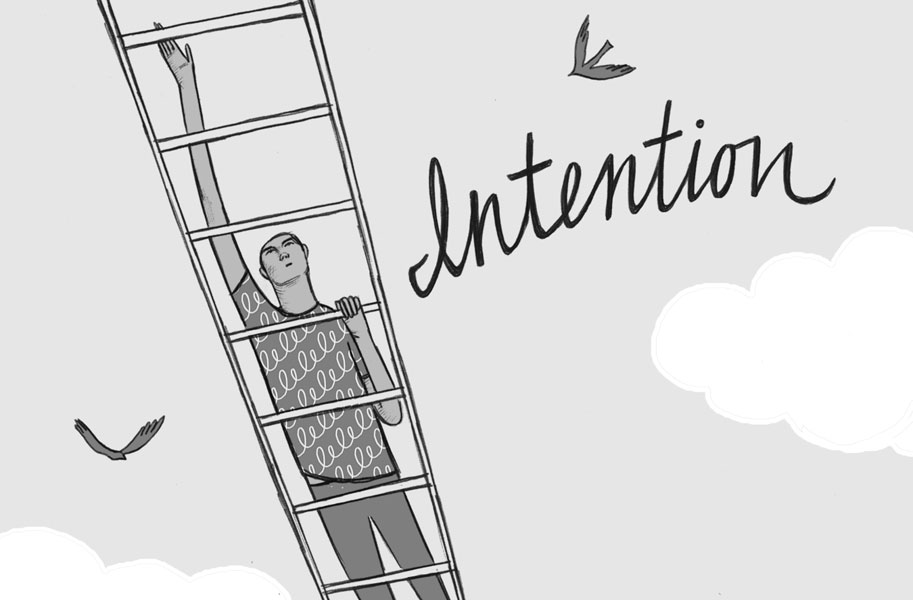
First, let’s think about the fact that whenever we are focused on a new intention, we are actually saying “YES” in our mind. We have, to some degree, made a decision to move forward.
Some of us have tried to say “yes” in the past to the very same thing that we are saying “YES” to today. So what will make the difference? How will we stand in the energy of “YES!” each day?
It’s no easy feat, but I suggest that each of us take time every morning to not only recall and be with our desire for at least 5 minutes, but also notice if in ANY way we are saying, “no,” and possibly blocking out intentions from manifesting.
I’ll give you an example: I said “YES” to this very same vision of writing for the public once before and I failed. Why? Because I was also saying “NO.” On the one hand, I said I wanted to write a blog and a book and offer it to the public. But that wasn’t totally accurate. I actually wanted to write a GREAT blog. Then it occurred to me that I might write a MAGNIFICENT book as well. I had somehow lost track of merely writing and enjoying the experience. I was no longer thinking about service. Instead, I allowed the voices in my head to turn the intention into a lofty expectation!
…And I did not discover these voices in just one sitting. You see, I was in a class and I had said “YES” to my intention of writing in front of the whole group. However, each night, alone and quiet in my little room, I heard nasty voices saying, “You are too busy to write,” and, “You really have too much unorganized material to ever create a magnificent book,” and, “You don’t have a good plan for your blog–all bloggers are good planners,” and, “You might piss off your family when you talk about them in your book,” and so on, and so on.
Truly, these messages were my “NO” voice and they were stepping all over my intention–writing for and serving the public–the one thing I THOUGHT I was saying “yes” to.
So, I failed. I finished the class, but I did not do my project. But some of the class participants, including the instructor, were curious what went wrong and asked if I’d talk about it in class. I had a profound experience sharing with them all the “no’s” that followed my “yes,” and how I caved in due to pressure. They really understood. They loved me in spite of my fears. They accepted me! And I realized “Ohhhhh! I am not accepting ME. That’s where I need to plant my ‘yes.’ I forgot to believe in ME!”
In essence, the group acted as a mirror so I could see that I quickly gave my power to the “no” voice and justified that the “yes” voice wasn’t that important. I was not accepting myself or believing in myself. I wanted a more balanced and false self to emerge, do all the work for me, and help me look good  Heck, it made sense to me! But after experiencing the love from the group, it was clear that I was giving in to an old habit, so I cut off the supply of self-love whenever I sat down to write. I stopped all self-acceptance, all connection with my desires, all belief in my worth, and that brought up the loud, nasty, “no” voice.
So, with their love and understanding, I created some writing exercises to get myself back in the groove.
You, too, may have one or two or twenty “no” voices that are looking for a place to go. Instead of letting them guide your intention, try this little trick:
- Take a sheet of paper and create two columns.
- On the left side, write the word, “YES!” On the right side, write the word, “NO!”
- Now, on the left side, try to write your intention in one paragraph. Then skip a line or two and paraphrase that intention into one clear, succinct statement, such as “I have a desire to serve the public by writing a blog for my website and articles for magazines.”
- Carry this piece of paper with you everywhere until we meet on Tuesday. Any time you hear your mind saying any thing about your intention that resembles a “no,” take out your sheet of paper and write it down. Just write it. Don’t worry if it includes cussing or shaming thoughts–just put it on paper so you have a place (other than your mind) for that thought to be.
- After adding the “no” voice to the paper, say to yourself, “This (what you just wrote down) may seem true right now, but I accept myself anyway.” Say it to yourself, breathe, say it again, breathe, and let the charge you feel dissipate. Keep breathing until you feel neutral.
This exercise is good training for the mind because it teaches us that even when we get a little nutty, we do not have to go with our thoughts. We have permission to stay with our self–our truest self–who knows that we deserve unlimited permission to manifest our desired intention.
I practice this often! I wish I had the insight during my previous class to practice it, but I was too caught up in getting to my intention as quickly as possible. Failing helped me realize that whenever I have an intention, my nutty mind will have opinions, so I best practice self-acceptance. As Robert Holden said, “You can have self-acceptance or self-rejection, but not both at the same time. Which one will you pick?”
Try it out for yourself: Write down the “yes” column, carry your note, stop and write any “no” messages that come up, and practice defusing the charge so you may return to that place of self-acceptance and wholeness. This is where the real YES! lives.
Enjoy the journey,
Coach Debby








Quick Links to our Social Media Sites